


Claw Machine Quality Control: Testing, Inspection, and Manufacturing Standards
Claw machine quality control involves checking a machine's construction, electrical components, gameplay, payment functions, appearance, and packaging before it reaches the customer. For arcade operators, distributors, and entertainment venues, a structured inspection process helps identify defects early and reduces the risk of installation problems after delivery. Buyers should confirm the manufacturer's testing procedures, request evidence of the agreed checks, and verify that the machine meets the requirements of its destination market.
1. Why Quality Control Matters for Commercial Claw Machines
Commercial claw machines may operate for extended periods in busy venues. A problem with the claw mechanism, control board, payment device, lighting, or wiring can interrupt operation and require maintenance.
Quality control is important for several reasons:
Operational reliability: Identifies defects that could interrupt normal operation.
Customer experience: Helps ensure controls, displays, and game functions work as intended.
Installation readiness: Reduces the likelihood of discovering basic faults after delivery.
Brand consistency: Helps customized machines match approved colors, logos, and specifications.
Shipping protection: Checks whether the machine is adequately prepared for transport.
Purchasing confidence: Gives buyers a clearer understanding of what has been inspected before shipment.
A manufacturer's inspection process should be matched to the machine model, order specification, and intended market. A visual check alone is not sufficient to establish electrical safety or long-term reliability.
2. Main Quality Control Checkpoints
Cabinet and Structural Inspection
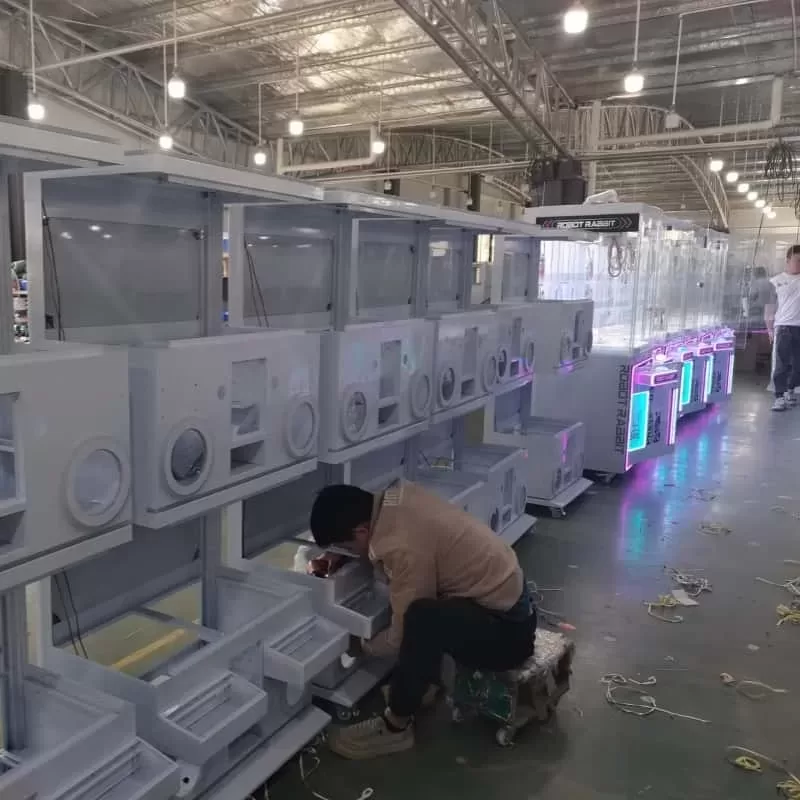
Inspect cabinet panels, doors, fasteners, joints, edges, and overall assembly. Check that doors close correctly, access panels fit properly, and the machine stands securely under its intended operating conditions.
Claw Mechanism and Movement
Test claw movement, lifting and releasing, carriage travel, limit switches, and the relevant mechanical components. Check for unusual noise, sticking, inconsistent movement, or loose connections.
Electrical Components and Controls
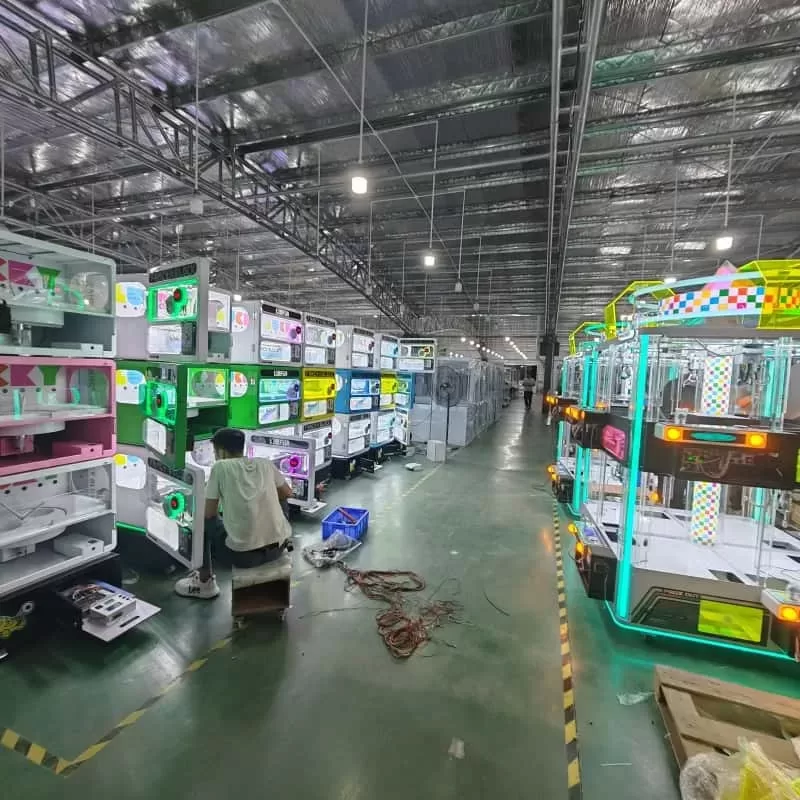
Inspect wiring, connectors, power supplies, grounding arrangements where applicable, buttons, joysticks, and control boards. Electrical safety checks should follow the applicable requirements and use suitable test methods.
Payment and Game Logic
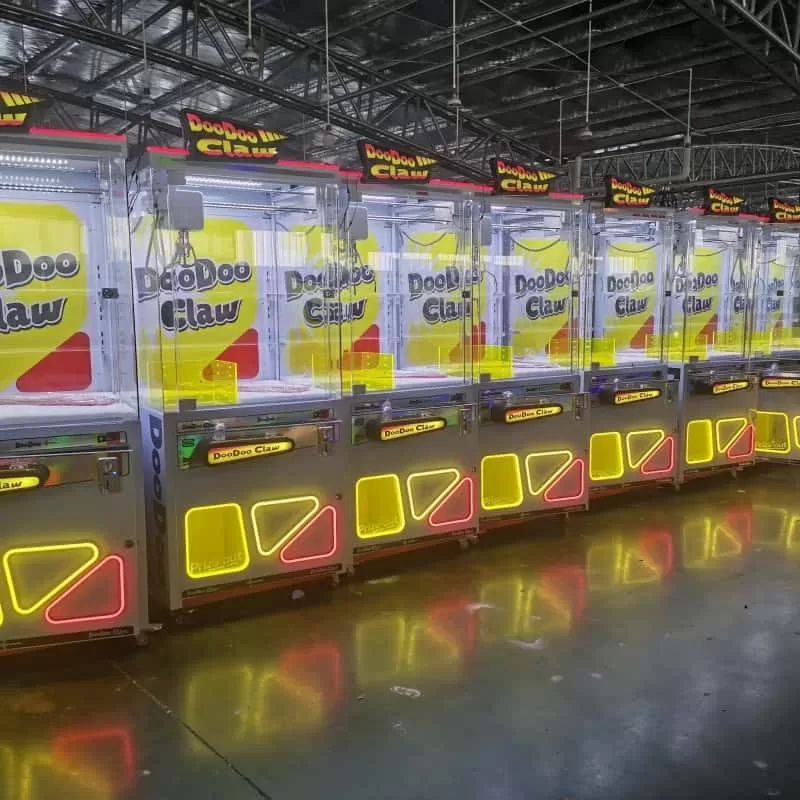
Test the installed payment configuration and confirm that accepted payments trigger the intended game. Verify supported settings, displays, and error handling against the approved specification.
Appearance and Customization
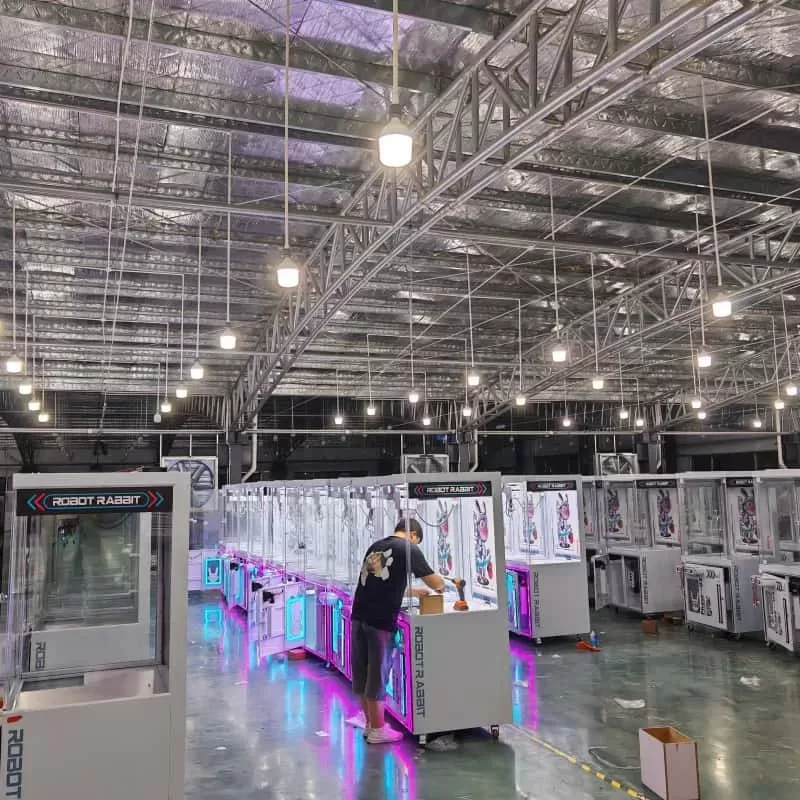
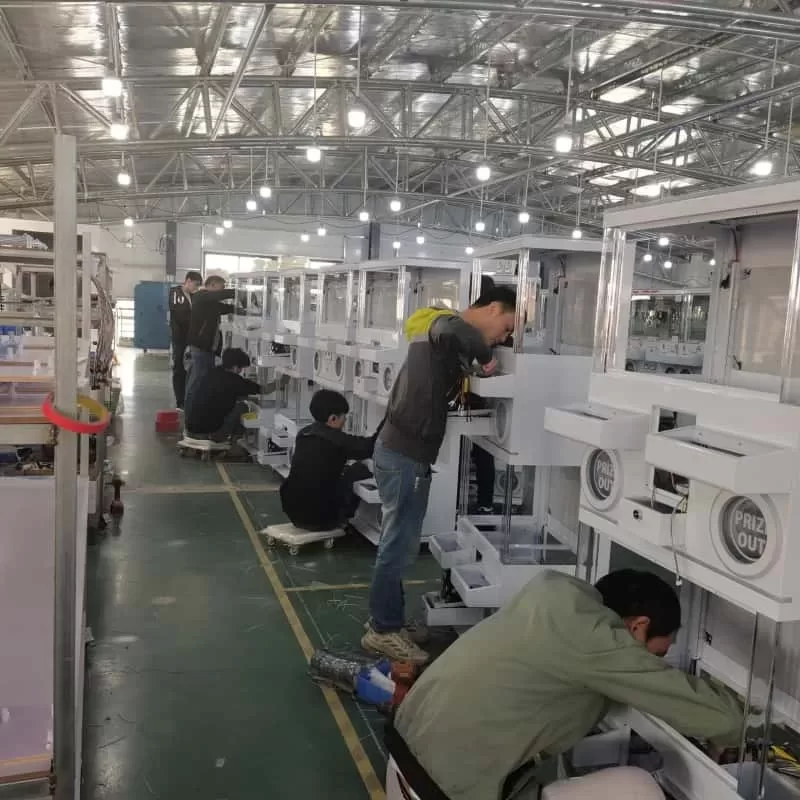
Check paint finish, graphics, logo placement, lighting, glass or transparent panels, labels, and visible assembly quality. Compare customized units with the approved artwork and specification.
Packaging and Shipping Preparation
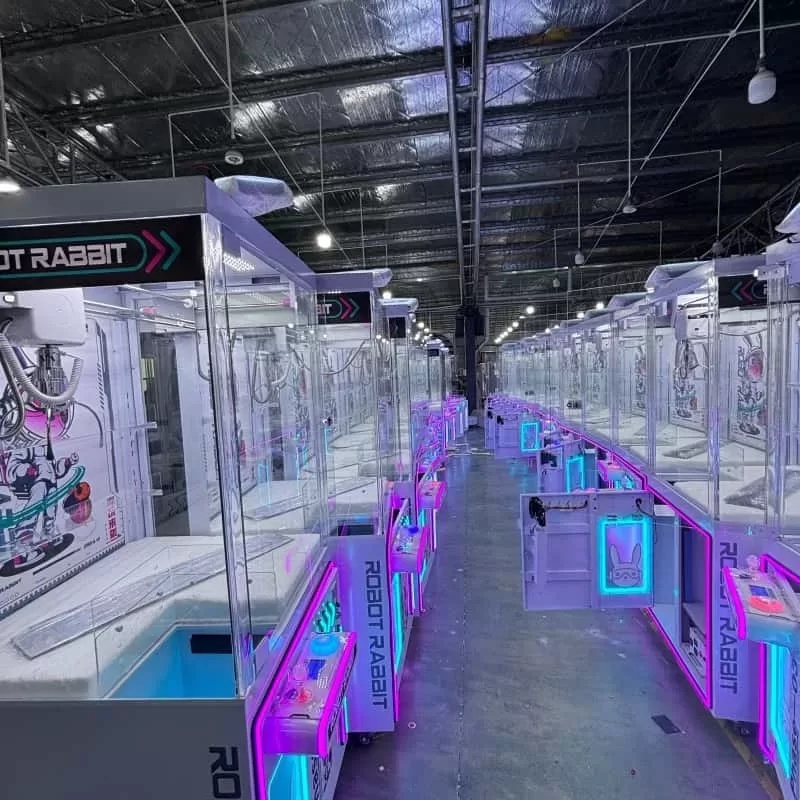
Verify protective materials, internal securing, crate condition, accessories, manuals, and shipping labels. Packaging should be suitable for the selected transport method and handling conditions.
3. What Should Be Tested Before Shipment?
The precise inspection plan depends on the model and contract. The following checklist is a practical starting point for buyers and manufacturers.
Inspection area | Example checks | Evidence to request |
|---|---|---|
Cabinet assembly | Panel fit, doors, fasteners, stability | Inspection checklist and photos |
Mechanical operation | Claw travel, lifting, release, limit switches | Functional test video or test record |
Electrical system | Wiring, connectors, grounding and applicable safety checks | Relevant test records |
Controls and display | Buttons, joystick, screen, indicators | Functional test record |
Payment system | Supported coins, banknotes, or configured cashless functions | Payment test results |
Gameplay | Start sequence, timing, supported settings | Demonstration video or test record |
Lighting and sound | LEDs, lighting modes, audio where fitted | Visual and functional inspection |
Custom branding | Logo, color, stickers, artwork placement | Comparison with approved design |
Accessories | Keys, cables, manuals, agreed spare parts | Packing list |
Packaging | Protection, securing, crate condition | Photos before dispatch |
Important: A test video can demonstrate that selected functions operated at the time of filming, but it does not replace applicable electrical safety testing, independent inspection, or certification.
4. Functional Testing: How to Check Gameplay
A machine can look correct while still having a functional problem. Buyers should ask the manufacturer to test the functions relevant to the ordered configuration.
Claw movement
Check that the claw travels through its intended operating range and responds to the controls. Listen for unusual noises and watch for sticking, abrupt movement, or inconsistent positioning.
Claw opening and closing
Confirm that the claw opens and closes properly and that the mechanism completes its intended sequence. Inspect the wiring and mechanical connections if movement is inconsistent.
Game start and timing
Test the start button, joystick, display, and game timer where fitted. Confirm that the game follows the agreed operating sequence.
Payment-to-game connection
For a coin-operated machine, test the supported coin denominations. If the machine includes a banknote validator or cashless reader, test those functions as well. Confirm that each successful payment starts the intended game and that errors are handled according to the system design.
Gameplay settings
If the model supports adjustable claw strength, play duration, winning-rate settings, or other parameters, verify that the delivered configuration matches the approved requirements. Settings and operating practices must comply with local laws and applicable consumer-protection rules.
Repeatability
Where practical, perform multiple game cycles to identify intermittent issues. The number of cycles and pass criteria should be agreed with the manufacturer rather than assumed to be the same for every machine.
5. Appearance and Customization Inspection
Customized arcade equipment needs additional checks because even a functional machine may fail to meet the buyer's branding requirements.
Inspect the following:
Cabinet color and finish.
Logo size, position, and orientation.
Sticker alignment and print quality.
Lighting color and intended effects.
Screen or display configuration.
Button and control-panel labels.
Door alignment and visible gaps.
Scratches, dents, paint defects, or loose trim.
Consistency between units in a multi-machine order.
For large orders, establish a written acceptance standard. If the order includes several customized models, identify the approved design and specifications for each model separately.
6. Manufacturing Standards and Compliance
Quality control and product certification are related, but they are not interchangeable.
A manufacturer may carry out routine inspections throughout production, while product compliance depends on the equipment design, destination market, applicable regulations, and relevant standards.
Before ordering, ask:
Which safety and compliance requirements apply in the destination country?
Does the supplied documentation cover the exact model and configuration?
Are any payment modules, power supplies, or other third-party components covered by separate requirements?
Can the manufacturer provide relevant test reports or declarations where applicable?
Are the machine's electrical ratings, labels, and instructions suitable for the destination market?
Do not assume that a certificate for one model automatically covers every product from the same factory. Buyers should verify the certificate holder, model scope, validity, and applicable requirements.
For customized projects, confirm whether design changes affect the original compliance documentation or require additional evaluation.
7. Pre-Shipment Inspection: Factory Check or Third-Party Inspection?
Buyers can use different levels of inspection depending on order value, project complexity, and risk tolerance.
Inspection approach | What it provides | Considerations |
|---|---|---|
Factory self-inspection | Manufacturer checks the agreed functions and appearance | Request a written checklist and evidence |
Remote video inspection | Buyer reviews selected tests through live video or recorded footage | Visibility and test coverage may be limited |
Third-party inspection | An independent inspector checks agreed acceptance criteria | Requires coordination, fees, and an agreed inspection scope |
On-site buyer inspection | Buyer or representative checks the machines before dispatch | Travel, scheduling, and technical expertise may be needed |
For a first order or a large customized shipment, an agreed pre-shipment inspection can be useful. Define the sample size, test procedures, acceptable defect levels, documentation, and corrective-action process before production is completed.
An inspection should not be treated as a guarantee that no problems will occur during transport or operation.
8. Packaging Quality and Shipping Protection
Arcade machines can be damaged by impact, vibration, moisture, or poor handling during transportation. Packaging requirements should reflect the equipment's size, weight, fragility, and shipping route.
Before dispatch, confirm:
Protective wrapping and cushioning.
Secure placement of moving parts.
Protection for glass, screens, and protruding components.
Crate or carton strength appropriate to the shipment.
Moisture protection appropriate to the transport environment.
Correct accessories and documentation.
Shipping marks and handling instructions.
Photographs of the machine and packaging before dispatch.
For ocean freight, air freight, and other transport methods, the suitable packaging design may differ. Buyers should also clarify who is responsible for freight booking, cargo insurance, and claims if damage occurs.
9. Common Quality Problems and Preventive Actions
Potential problem | Possible cause | Preventive action |
|---|---|---|
Claw movement is inconsistent | Mechanical obstruction, loose connections, or component fault | Test movement and inspect relevant components |
Payment does not start the game | Incompatible hardware, wiring issue, or configuration error | Test the complete payment-to-game sequence |
Lighting is incorrect | Configuration mismatch or wiring problem | Compare against the approved specification |
Cabinet finish is damaged | Handling, finishing, or packaging issue | Inspect the finish and verify protective packaging |
Logo or graphics are misplaced | Incorrect artwork approval or production reference | Approve final artwork and check placement before shipment |
Machine arrives with shipping damage | Insufficient protection or transport impact | Use suitable packaging and document the shipment condition |
Accessories are missing | Packing-list or checking error | Verify the agreed accessory list before sealing the package |
When a defect is found, record the machine model, serial number if available, symptoms, photos or videos, and the relevant order specification. Agree on corrective actions and retesting before shipment or acceptance.
10. Frequently Asked Questions
What does claw machine quality control include?
It can include structural inspection, mechanical checks, electrical safety testing, payment-system verification, gameplay testing, appearance inspection, documentation review, and packaging checks. The exact scope depends on the model and agreed inspection plan.
Should I request a test video before shipment?
A test video can help you review selected functions and the visible condition of the machine. For higher-risk purchases, combine video evidence with written test records or an independent inspection where appropriate.
Can a machine pass functional testing but still have compliance issues?
Yes. A machine may operate normally but still lack required documentation, labeling, or compliance with destination-market rules. Functional checks and regulatory compliance should be reviewed separately.
Is third-party inspection necessary for every order?
Not necessarily. The appropriate inspection level depends on order size, customization, supplier history, and the buyer's risk tolerance. Independent inspection may be particularly useful for large orders or products with specific acceptance requirements.
What should I check on a customized claw machine?
Check the approved logo and artwork, cabinet color, lighting, payment configuration, gameplay settings, dimensions, accessories, and packaging. Compare the delivered configuration with the written order specification.
How can I reduce shipping-related quality problems?
Agree on suitable packaging, secure moving components, protect fragile surfaces, document the packed condition, and clarify shipping and insurance responsibilities before dispatch.
Does factory quality control guarantee a long machine lifespan?
No. Quality control can identify defects and verify selected functions, but lifespan also depends on design, components, installation, operating conditions, maintenance, and usage intensity. Ask about warranty terms and technical support separately.
11. Work with Fanhong on Your Arcade Equipment Order
Fanhong manufactures commercial claw machines and arcade equipment for distributors, operators, and entertainment venues. Its manufacturing process includes cutting, bending, welding, grinding, painting, assembly, and debugging. For a specific order, buyers should confirm the applicable inspection steps, functional test scope, packaging requirements, and documentation before production is finalized.
When requesting a quotation, provide your machine model, order quantity, destination country, customization requirements, and any special testing or inspection requirements.
Website: https://www.gzkwan.com/
Factory: https://www.gzkwan.com/factory/
WhatsApp: +86 18922467886
Factory address: Building A, No. 669 Xinling Road, Shiqi Town, Panyu District, Guangzhou, China.
Contact Fanhong to discuss your project specifications and confirm the inspection and shipment arrangements for your order.
