


Commercial Claw Machine Price: What Affects the Cost?
The price of a commercial claw machine depends on its size, design, features, payment system, customization requirements, order quantity, and delivery arrangements. A compact machine and a large, customized arcade model can have very different prices, even when both are designed for prize-catching games.
For arcade operators, family entertainment centers, shopping malls, and distributors, the best way to compare commercial claw machine prices is to evaluate the complete machine configuration and total purchasing cost rather than the unit price alone.
1. How Much Does a Commercial Claw Machine Cost?
There is no single price that applies to every commercial claw machine. Prices vary according to the machine model, manufacturer, specifications, order quantity, and destination market.
A supplier's quotation may cover only the machine itself, while another quotation may include customization, payment hardware, spare parts, or export packaging. Buyers should confirm the scope of each quotation before comparing prices.
The following table provides a practical framework for understanding the main machine categories.
| Machine category | Typical characteristics | Main cost considerations |
|---|---|---|
| Mini claw machine | Compact cabinet for smaller spaces | Cabinet size, control system, and prize capacity |
| Standard commercial claw machine | Single-player machine for arcades and retail venues | Cabinet construction, claw mechanism, lighting, and controls |
| Large-format claw machine | Larger cabinet or oversized prize display | Dimensions, structural design, shipping volume, and handling |
| Multiplayer claw machine | Two or more players can use the same unit | Number of player stations, controls, and cabinet configuration |
| Custom claw machine | Branded appearance or customized features | Artwork, lighting, software changes, and special components |
| Cashless-enabled claw machine | Configured for supported electronic payments | Payment hardware, integration, compatibility, and setup |
This classification helps buyers understand why prices differ. To obtain an accurate quote, provide the supplier with the exact model, quantity, desired configuration, and delivery destination.
2. Machine Size and Design
Machine dimensions are among the first factors to consider when comparing commercial claw machine costs.
A compact cabinet may be suitable for a small retail location, while a large-format machine may require more materials, a different cabinet structure, and more protective packaging. Multiplayer machines may also require additional controls and a different internal layout.
When comparing models, consider:
Overall height, width, and depth
Cabinet construction and finish
Claw mechanism and control configuration
Number of players
Prize compartment size
Display screens and lighting
Machine weight and packaging dimensions
Do not choose a machine based on photographs alone. Request the dimensions and technical specifications to ensure it fits your intended venue and transportation arrangements.
3. Customization and Branding Costs
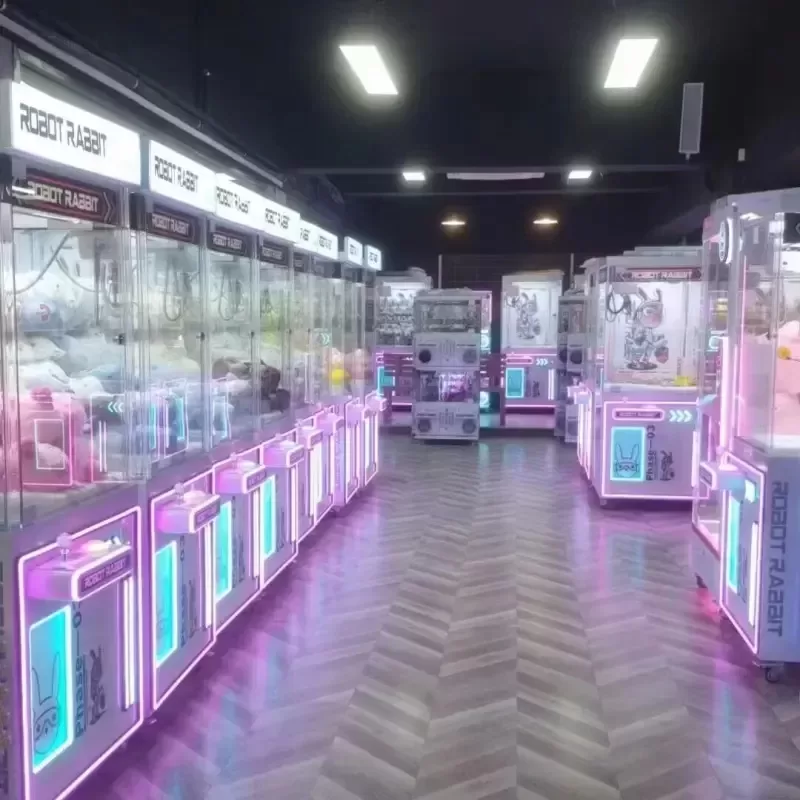
Customization can help arcade businesses maintain a consistent brand identity, launch a themed attraction, or create a distinctive appearance for a retail location.
The cost depends on the scope of the changes and the machine model.
| Customization type | What may affect the price |
|---|---|
| Logo and stickers | Artwork preparation, printing, and application requirements |
| Cabinet colors | Standard color availability and special finishing |
| Custom exterior artwork | Design complexity and production requirements |
| LED lighting | Lighting configuration and additional components |
| Gameplay settings | Software configuration and requested game logic |
| Payment configuration | Hardware selection and compatibility |
| Special cabinet design | Engineering work, materials, and project complexity |
Some standard branding options may be available without an additional customization charge, depending on the model and order quantity. Special designs or additional hardware may cost more.
Before approving a custom order, request a written breakdown of the customization charges, design approval process, and production timeline.
For OEM and ODM projects, confirm who owns the artwork, which design files are required, and whether any changes are possible after production begins.
4. Payment Systems and Additional Hardware
The payment system can affect the total cost of a commercial claw machine.
Depending on the model, a machine may be configured for coins, banknotes, card readers, QR-code payments, or other supported cashless systems. These options are not universally compatible with every machine or market.
Before ordering, confirm:
Which payment methods are supported
Whether the payment hardware is included in the base quotation
Whether a separate reader or controller is required
Whether software integration is needed
Whether the system supports the intended currency and provider
Whether installation, activation, or recurring fees apply
For example, a buyer who requires both coin and cashless payments should request a quotation for that exact configuration instead of comparing it with a basic coin-operated model.
The same principle applies to additional screens, special lighting, and other optional components.
5. Order Quantity and Wholesale Pricing
The number of machines you purchase can influence the quoted unit price.
A distributor purchasing several machines may have different commercial terms from an operator purchasing a single unit. Larger orders may also involve mixed models, customized branding, additional packaging requirements, or a consolidated shipment.
However, volume discounts are not automatic. The final price depends on the product mix, order specifications, production schedule, and supplier's pricing policy.
When requesting wholesale pricing, provide:
The number of machines required
The preferred models
Whether you need one model or a mixed order
The desired customization
The destination country and city
Your expected purchasing schedule
If you are testing a new market, ask whether the supplier can quote a smaller initial order and a separate price for a larger follow-up order. This helps you evaluate the purchasing options without assuming that a particular discount is guaranteed.
6. Shipping and Export Packaging
International shipping can represent a significant part of the total purchasing cost, especially for large cabinets or orders with substantial packaging volume.
The freight cost depends on factors such as:
Shipping destination
Total shipment volume and gross weight
Number and dimensions of crates
Shipping method
Port handling and local delivery
Cargo insurance
Customs clearance arrangements
Applicable import duties and taxes
Commercial claw machines may be shipped using protective export packaging, including wooden crates where appropriate. The packaging requirements depend on the cabinet design, transport method, and buyer's instructions.
Ask the supplier for the packing dimensions, gross weight, number of packages, and proposed shipping terms before requesting a freight quotation.
Understand the shipping terms
EXW and FOB are examples of shipping terms that assign different responsibilities to the buyer and seller. They should not be treated as interchangeable price offers.
Depending on the agreed term, the buyer may need to arrange some or all of the inland transportation, export handling, international freight, insurance, import clearance, and final delivery.
If you want the machines delivered to your business address, request a quote that clearly identifies the destination and the services included. Confirm whether duties, taxes, and other destination charges are included or excluded.
7. Installation, Maintenance, and Spare Parts
The initial purchase price is only one part of the cost of operating commercial claw machines.
Over time, operators may need replacement components, technical assistance, cleaning supplies, or maintenance services. These requirements depend on the machine design, operating conditions, usage, and maintenance practices.
Before buying, ask the supplier about:
Common replacement parts
Spare-part availability and prices
Technical documentation
Troubleshooting instructions
Remote technical support
Warranty coverage
Procedures for reporting faults
For multi-location operators and distributors, it may be useful to maintain a small stock of commonly required parts. Discuss the appropriate parts list with the supplier based on the selected models.
A supplier that clearly explains its support process can help you plan maintenance and manage potential downtime.
8. Warranty and After-Sales Support
Warranty terms can affect the financial risk of purchasing arcade equipment.
Compare the warranty duration, covered components, exclusions, claim procedures, and responsibility for shipping replacement parts. A longer stated warranty is not necessarily more valuable if the coverage is unclear or difficult to use.
Ask whether the supplier provides remote troubleshooting, setup instructions, operating manuals, and guidance for replacing components.
Fanhong offers a two-year limited warranty and lifetime technical support under its applicable service terms. Buyers should confirm the specific coverage, exclusions, and service procedures for their selected machines before ordering.
9. Calculate the Total Cost of Ownership
To compare suppliers accurately, calculate the estimated cost of purchasing and operating the equipment rather than focusing only on the factory price.
A useful purchasing formula is:
Total initial purchasing cost = Machine price + Customization + Optional hardware + Packaging + Freight + Insurance + Applicable import charges + Installation costs
Not every item will apply to every order. Some quotations may already include certain services, so avoid counting the same expense twice.
For a broader operating-cost estimate, also consider electricity, cleaning, maintenance, replacement parts, payment-processing fees, and other ongoing expenses relevant to your venue.
Example: Comparing two supplier quotations
Imagine that two suppliers quote machines for the same project.
| Cost component | Supplier A | Supplier B |
|---|---|---|
| Machine configuration | Standard model | Customized model |
| Payment hardware | Not included | Included as specified |
| Export packaging | Quoted separately | Included |
| Freight | Buyer arranges | Quoted separately |
| Warranty | Terms to be confirmed | Terms to be confirmed |
This comparison is intentionally illustrative rather than a real price quote. It shows why the lowest initial number may not represent the lowest total cost.
Before making a decision, request the same machine configuration and clearly itemized costs from both suppliers.
10. How to Request an Accurate Claw Machine Quote
A detailed inquiry helps a manufacturer recommend suitable models and prepare a more accurate quotation.
Include the following information in your request:
Quantity: How many machines do you need?
Machine type: Mini, standard, large-format, multiplayer, or custom?
Venue: Arcade, shopping mall, family entertainment center, retail shop, or distribution business?
Prize type: Plush toys, figurines, blind boxes, or other products?
Payment methods: Coins, banknotes, card, QR code, or other supported options?
Customization: Do you need a logo, special colors, artwork, lighting, or gameplay changes?
Destination: Which country and city will receive the shipment?
Shipping preference: Do you need port delivery or delivery to a business address?
If you have a reference photo or preferred model, include it in your inquiry. This helps the supplier identify the intended machine and avoid quoting the wrong configuration.
11. Buying Commercial Claw Machines Directly from a Manufacturer
Working directly with a manufacturer can simplify communication about machine specifications, customization, production scheduling, and technical requirements. The actual value still depends on product quality, service terms, and the supplier's ability to meet your requirements.
Guangzhou Fanhong Animation Technology Co., Ltd. manufactures commercial claw machines and other arcade entertainment equipment in Panyu, Guangzhou, China.
Fanhong supports OEM/ODM projects and offers a range of machine configurations for arcade operators, family entertainment centers, shopping malls, distributors, and other commercial buyers.
Depending on the selected model, customers can discuss cabinet colors, logo and sticker customization, lighting, supported payment methods, and gameplay settings. The company also coordinates production, export packaging, and technical support for international orders.
When requesting a quote from Fanhong, provide your preferred models, quantity, customization requirements, payment configuration, and destination. This allows the team to prepare a quotation based on the actual project rather than a generic price estimate.
Visit the Fanhong Factory page to learn more about the manufacturing facility.
Frequently Asked Questions
1. What affects the price of a commercial claw machine?
The main factors include machine size, cabinet design, components, gameplay configuration, payment hardware, customization, order quantity, packaging, shipping, and warranty arrangements. The exact combination depends on the model and destination market.
2. Are commercial claw machines cheaper when purchased in bulk?
Bulk purchasing may qualify for different unit pricing, depending on the quantity, product mix, customization, and supplier's commercial terms. Request quotations for both your initial order and any planned larger order to compare the available options.
3. Does customizing a claw machine increase the price?
It depends on the requested changes. Standard logo or sticker options may be included in some offers, while special cabinet designs, additional hardware, or more complex engineering work may incur additional charges. Ask for written confirmation before approving the order.
4. Is shipping included in the claw machine price?
Not always. Some quotations cover only the machines, while others include packaging or certain transportation services. Confirm the shipping term, destination, insurance, and applicable charges before comparing offers.
5. What payment methods can a commercial claw machine support?
Depending on the model, options may include coins, banknotes, card readers, QR-code payments, or other supported cashless systems. Confirm hardware compatibility and any integration or recurring fees with the supplier and payment provider.
6. How can I compare two claw machine suppliers fairly?
Request the same models, specifications, quantities, payment configuration, packaging, and delivery scope. Then compare the itemized costs, production timeline, warranty, spare parts, and technical support.
7. What information should I provide to get a quotation?
Provide the quantity, preferred machine model, customization requirements, payment methods, destination country and city, and preferred shipping arrangement. Reference photos or product links can also help clarify your requirements.
8. Does the lowest machine price always offer the best value?
No. A lower price may exclude required hardware, customization, packaging, or support. Compare the complete purchasing cost and the terms attached to each offer before deciding.
Conclusion
Commercial claw machine prices vary because machine specifications, customization, payment systems, order quantities, and shipping arrangements differ from project to project.
The most effective way to compare suppliers is to define your requirements, request itemized quotations, verify what is included, and calculate the total purchasing cost. Clear specifications and written commercial terms can help reduce unexpected expenses and make purchasing decisions more straightforward.
Looking for commercial claw machines for your arcade, family entertainment center, retail venue, or distribution business?
Contact Fanhong to discuss suitable models, customization options, wholesale requirements, and shipping arrangements.
