



How to Start a Claw Machine Business: Equipment and Planning Guide
Starting a claw machine business requires more than purchasing machines and filling them with prizes. You need a suitable location, a clear operating model, reliable equipment, a prize sourcing plan, and a budget that accounts for both startup and ongoing costs. Whether you plan to open a dedicated claw machine arcade or place machines inside shopping malls, family entertainment centers, and retail venues, careful planning can help you make better purchasing decisions and manage operating risks.
This guide explains the main steps involved in starting a commercial claw machine business, from selecting your business model to choosing equipment and preparing for daily operations.
1. Choose the Right Claw Machine Business Model
Before purchasing equipment, decide how you intend to operate your business. Different models require different levels of investment, staffing, and venue management.
Business model | How it works | Key considerations |
|---|---|---|
Dedicated claw machine arcade | Operate multiple machines in one location | Rent, fit-out, foot traffic, staffing, and prize inventory |
Shopping mall placement | Install machines in a mall or retail space | Rental terms, revenue sharing, location approval, and electricity |
Family entertainment center (FEC) | Add claw machines to a larger entertainment venue | Machine variety, customer flow, and coordination with other attractions |
Retail or cinema placement | Position machines near customer waiting or leisure areas | Available floor space, audience suitability, and operating agreements |
Event rentals | Supply machines for temporary events and promotions | Transport, setup, collection, staffing, and event-specific requirements |
Multi-location operation | Manage machines across several venues | Remote monitoring options, maintenance, inventory, and route planning |
For a new operator, starting with a small number of machines can be a practical way to evaluate demand before expanding. The best approach depends on your available capital, access to suitable locations, and experience managing customer-facing equipment.
2. Research Your Target Market and Location
Location affects how often customers see your machines and whether they decide to play. A visually attractive machine may still perform poorly if it is placed in an area with limited relevant foot traffic.
Consider these factors when evaluating a potential venue:
Target audience: Determine whether the location attracts families, teenagers, young adults, tourists, or other suitable customer groups.
Foot traffic: Observe visitor volume at different times of day and on different days of the week.
Visibility: Look for positions where machines are easy to see without obstructing entrances, walkways, or emergency exits.
Competition: Check nearby arcades, prize machines, redemption games, and other entertainment options.
Rental terms: Understand fixed rent, revenue-sharing arrangements, deposits, contract length, and additional fees.
Venue requirements: Confirm electrical supply, floor loading where relevant, access for delivery, operating hours, and installation rules.
Do not evaluate a venue solely by its reported visitor numbers. The proportion of visitors likely to engage with your machines, their spending behavior, and the cost of occupying the space are also important.
3. Select the Right Commercial Claw Machines
The machines you purchase should match your venue, customer demographic, prize selection, and operating plan.
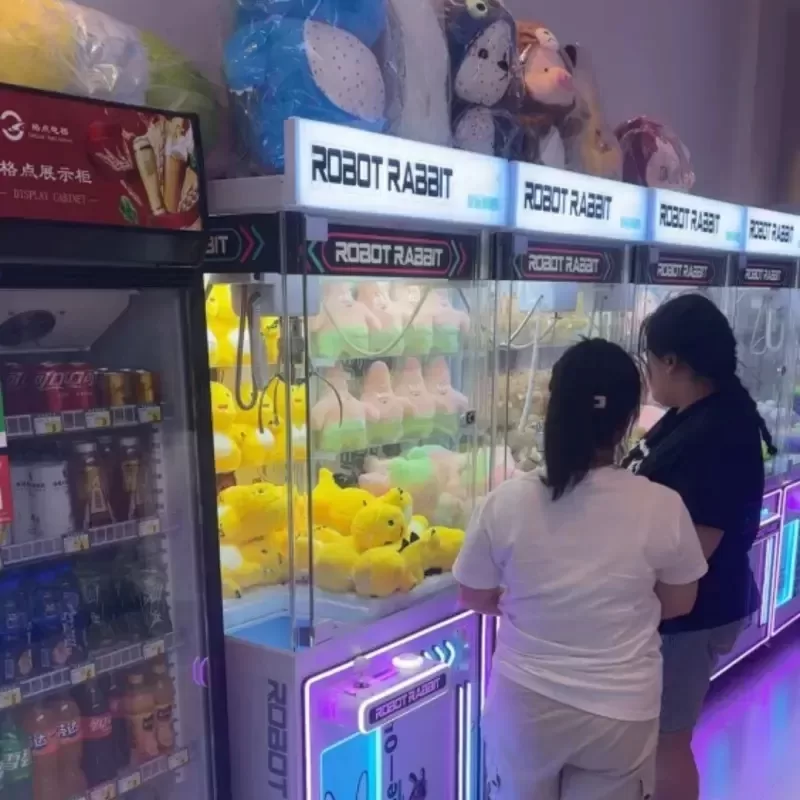
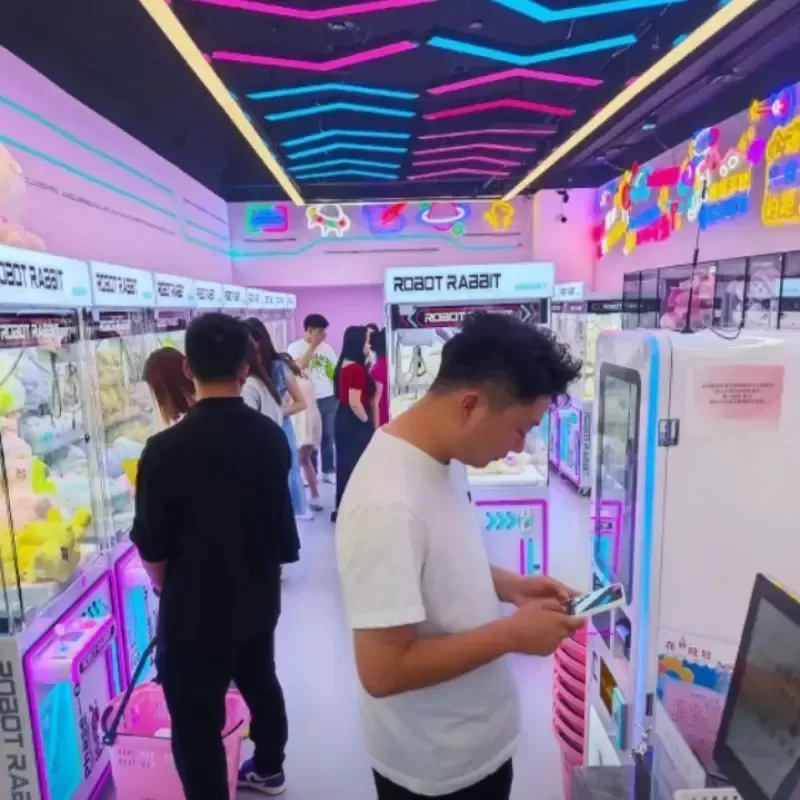
Common machine types
Machine type | Potential application | What to evaluate |
|---|---|---|
Standard single-player claw machine | Small arcades, retail venues, and mixed entertainment spaces | Footprint, prize compartment, controls, and visibility |
Mini claw machine | Compact locations and smaller prize formats | Machine dimensions, prize capacity, and accessibility |
Large-format claw machine | Larger venues and prominent display areas | Transport access, floor space, power, and maintenance |
Multi-player claw machine | Locations designed for group play | Player positions, simultaneous operation, and prize replenishment |
Custom-branded claw machine | Promotional campaigns, chains, and branded venues | Cabinet graphics, logo placement, lighting, and customization scope |
When comparing equipment, look beyond the purchase price. Check machine dimensions, prize compatibility, control systems, payment methods, spare parts availability, warranty terms, and the manufacturer's technical support.
For a multi-machine venue, a combination of machine sizes and prize formats may offer more variety than purchasing one type exclusively. However, each model should serve a clear purpose in your overall layout.
4. Prepare a Realistic Startup Budget
Your startup budget should cover the equipment itself as well as the expenses required to open and operate the business.
Typical cost categories include:
Machine purchases and any customization.
Freight, import duties, taxes, and delivery to the venue.
Rental deposits and initial rent.
Electrical work, signage, and venue fit-out.
Initial prizes and replacement inventory.
Payment systems and any required transaction fees.
Business registration, permits, insurance, and professional services where applicable.
Staff, cleaning, maintenance, and working capital.
The following is an illustrative planning example, not a market quote or a guaranteed startup cost.
Expense category | Example planning allowance |
|---|---|
10 machines at an assumed $1,500 each | $15,000 |
Initial prize inventory | $2,000 |
Freight and delivery allowance | $2,500 |
Venue deposit and initial rent | $4,000 |
Fit-out, signage, and installation | $2,000 |
Contingency and working capital | $4,500 |
Illustrative total | $30,000 |
These figures are hypothetical assumptions used to demonstrate budgeting. Actual equipment prices, shipping charges, rent, taxes, and setup costs can differ substantially by model, destination, venue, and order quantity.
Before committing to a purchase, request a detailed quotation that separates equipment costs from shipping, optional payment systems, customization, and other charges.
5. Calculate Operating Costs and Break-Even Requirements
A business plan should estimate recurring expenses and the amount of revenue required to cover them.
Common operating expenses include:
Rent or venue revenue share.
Prize replenishment.
Payment processing fees.
Staff wages and routine cleaning.
Electricity and connectivity, where applicable.
Repairs, replacement components, and maintenance.
Insurance, taxes, and administrative expenses.
One useful starting point is to calculate your monthly break-even revenue.
Break-even formula:
[ ext{Break-even revenue} = rac{ ext{Monthly fixed costs}}{ ext{Contribution margin ratio}} ]
The contribution margin ratio represents the portion of revenue remaining after costs that vary with sales, such as prize costs and transaction fees.
For example, if fixed monthly costs are $6,000 and the contribution margin ratio is 60%, the approximate monthly break-even revenue is $10,000.
This calculation is a simplified planning tool. It does not include financing costs or unexpected capital expenditure unless you add them to the relevant cost categories.
Track actual results after opening. Compare revenue, prize costs, maintenance, and venue expenses by machine and location rather than relying only on total sales.
6. Choose Prizes That Match Your Customers
Prize selection affects the appearance of your machines, the experience customers have, and the frequency with which you need to replenish inventory.
Popular categories may include:
Plush toys and stuffed animals.
Licensed or themed merchandise, where authorized.
Small toys and collectible items.
Keychains, accessories, and novelty gifts.
Seasonal or event-specific prizes.
When sourcing prizes, evaluate more than the wholesale price. Consider product quality, dimensions, weight, packaging, durability, safety requirements, and whether the prize is suitable for your machine's claw and compartment.
A prize that is too large, too heavy, or poorly shaped may not work well with a particular setup. Test samples before ordering in bulk.
You should also establish a replenishment process. Record which prizes sell or run out quickly, monitor inventory, and adjust your purchasing plan based on actual demand.
7. Plan Payment Methods and Gameplay Settings
Customer payment preferences vary by market and venue. Depending on the machine model and local requirements, possible payment options include coins, banknotes, cards, QR payments, or cashless systems.
Before ordering, confirm:
Which payment methods are supported by the exact model.
Whether additional hardware or software integration is required.
Transaction fees and settlement arrangements.
Currency, voltage, plug, and regional compliance requirements.
Whether the system supports your preferred reporting or monitoring functions.
Gameplay settings also need attention. Depending on the equipment, configurable options may include claw strength, play duration, number of rounds, prize rules, and different game modes.
Set and test gameplay parameters responsibly. Any prize, probability, or promotional claims should accurately reflect how the machine operates and comply with local consumer protection, amusement, and gambling-related regulations where applicable.
8. Work With a Reliable Claw Machine Manufacturer
Your supplier affects equipment quality, customization, delivery planning, and the availability of technical support after installation.
Before placing an order, ask the manufacturer for:
A current product catalog and model specifications.
Machine dimensions, weight, power requirements, and prize capacity.
Videos or demonstrations of the machine in operation.
Available branding, cabinet color, lighting, and gameplay customization.
Supported payment systems for your destination market.
Warranty terms, troubleshooting guidance, and spare parts availability.
Packaging details, shipping options, and estimated production lead time.
Documentation relevant to your market and the specific model.
If you are ordering multiple machines, confirm that the quotation identifies the exact models, quantities, configuration, and accessories. For customized projects, approve the design and specifications before production begins.
Fanhong is a commercial arcade and claw machine manufacturer offering equipment for entertainment venues, operators, distributors, and branded projects. Depending on the selected model and project requirements, buyers can discuss cabinet branding, graphics, lighting, payment configurations, and gameplay settings.
Explore the Fanhong factory to learn more about its manufacturing facilities and production processes.
9. Plan Installation, Testing, and Daily Operations
Equipment should be checked before it is opened to customers. A structured commissioning process helps identify problems before they affect normal operations.
Before opening
Confirm that all machines arrived without visible shipping damage.
Check the power supply, cables, controls, and payment equipment.
Test the claw mechanism and movement in all intended directions.
Confirm that the prize compartment and access panels are secure.
Load suitable prizes and test their movement within the machine.
Verify the displayed instructions and pricing.
Clean the cabinets, glass, controls, and customer-facing surfaces.
Record serial numbers, supplier details, and warranty information.
Daily operating routine
Task | Recommended action |
|---|---|
Opening inspection | Check power, controls, payment systems, and visible damage |
Prize replenishment | Refill machines and remove damaged or unsuitable prizes |
Cleaning | Clean glass, control surfaces, and high-contact areas |
Performance review | Record revenue, plays, payment issues, and customer feedback where available |
Maintenance log | Document faults, repairs, and parts replaced |
Closing checks | Secure the venue and follow the approved cash-handling process |
Assign clear responsibility for these tasks. For multi-location businesses, consistent checklists and maintenance records make it easier to identify recurring problems and compare performance.
10. Manage Risks Before Expanding
Expansion should be based on operating evidence, not just the number of machines you can purchase.
Important risks include:
Weak location performance: Test customer demand and review venue costs before committing to a long lease.
High prize expenses: Track prize cost per play and inventory turnover.
Equipment downtime: Maintain spare parts and a clear process for contacting technical support.
Unexpected logistics costs: Confirm packaging, shipping, customs, and final delivery arrangements in advance.
Regulatory issues: Check local rules for amusement devices, prizes, payment processing, signage, and any required licenses.
Cash flow pressure: Keep sufficient working capital for rent, replenishment, repairs, and other expenses.
Overexpansion: Add machines or locations only when actual performance supports the additional investment.
Review each machine's results periodically. If one location underperforms, investigate the placement, customer profile, prize assortment, operating costs, and machine condition before deciding whether to relocate or replace equipment.
11. A Practical Launch Plan
The following timeline is a planning framework. Actual lead times depend on location agreements, permits, equipment availability, customization, and shipping.
Stage | Main activities |
|---|---|
Planning | Define the business model, target audience, and available budget |
Location research | Compare venues, rental terms, customer traffic, and competition |
Equipment selection | Compare models, payment options, specifications, and supplier support |
Financial preparation | Build a startup budget and estimate break-even revenue |
Ordering | Confirm the quotation, configuration, production schedule, and shipping terms |
Venue preparation | Arrange installation space, electrical supply, signage, and required approvals |
Commissioning | Install machines, test gameplay, and train operators |
Ongoing review | Track revenue, expenses, prize inventory, maintenance, and customer feedback |
Avoid opening before the venue, equipment, payment systems, and operating procedures are ready. A controlled launch makes it easier to identify issues and adjust the business model.
Frequently Asked Questions
How much money do I need to start a claw machine business?
The amount depends on the number and type of machines, the location, rent, prizes, shipping, fit-out, and working capital. A small placement operation may require much less capital than a dedicated arcade. Build a budget from actual supplier quotations and venue costs before investing.
How many claw machines should I start with?
There is no universal number. Consider the space available, expected customer demand, rental terms, and your ability to maintain and replenish the machines. Starting with a manageable number can help you test the business before expanding.
Where should I place claw machines?
Potential venues include shopping malls, family entertainment centers, cinemas, retail locations, and dedicated arcades. Evaluate foot traffic, audience suitability, visibility, rental costs, competition, and venue rules before selecting a site.
Are claw machines profitable?
Profitability depends on actual revenue, prize expenses, rent, payment fees, labor, maintenance, and other operating costs. There is no guaranteed return. Use a break-even calculation and track real operating data before expanding.
Can I customize claw machines for my brand?
Many commercial models support some degree of customization, such as cabinet colors, graphics, logos, lighting, and selected gameplay or payment configurations. Confirm the available options, minimum order requirements, and costs with the manufacturer for your chosen model.
What should I look for in a claw machine supplier?
Compare product specifications, build quality, customization capability, payment compatibility, packaging, shipping, warranty terms, spare parts, and after-sales technical support. Request clear documentation before placing an order.
How do I maintain claw machines?
Inspect the claw mechanism, movement system, controls, wiring, payment equipment, and prize compartment regularly. Clean the machines, record faults, and follow the manufacturer's maintenance instructions. Disconnect power before carrying out maintenance that requires access to electrical or moving components.
Conclusion
Starting a claw machine business involves coordinating equipment, location, prizes, payments, operating costs, and ongoing maintenance. The most practical approach is to define your business model first, prepare a realistic budget, select equipment for your target customers, and evaluate performance before expanding.
If you are sourcing commercial claw machines for a new arcade, retail placement project, or multi-location operation, contact Fanhong to discuss suitable models and project requirements.
Website: https://www.gzkwan.com/
Factory information: https://www.gzkwan.com/factory/
WhatsApp: +86 18922467886
